04 Jun
Advantages of Trisodium Methylglycinediacetic Acid (MGDA 40% Liquid)
European detergents are getting more concentrated. Smaller bottles, less plastic, lower transport emissions – everyone benefits. But concentrated formulas bring real formulation headaches.
Two problems cause most of the trouble: freeze-thaw stability and ingredient compatibility.
When temperatures drop below freezing – and they do, from Stockholm to Munich to Lyon – concentrated liquids can turn cloudy, separate, or turn into a solid gel. Even worse, incompatible ingredients may precipitate or crystallise, ruining the product completely.
This is where chelator choice matters. Trisodium Methylglycinediacetic Acid (MGDA 40% liquid) – a biodegradable, phosphorus-free chelator – is proving to be a practical solution. This article looks at why.
What Is MGDA 40% Liquid?
MGDA is an amino-acid-based chelator. Its chemical structure binds tightly to calcium, magnesium, iron, and copper ions – exactly the metals that cause problems in detergent formulations.
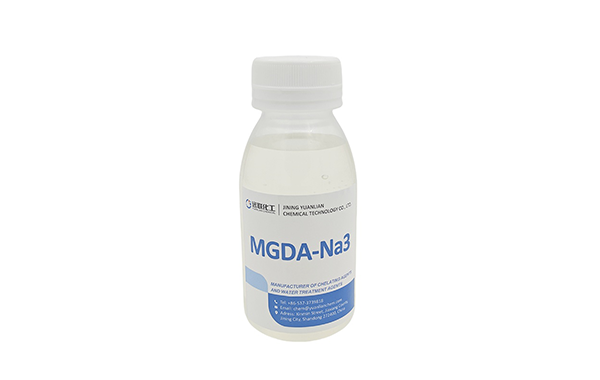
The 40% liquid form is a clear to slightly yellowish solution with a pH of 11–13 and active content of 38–40%.
Key advantages over older chelators:
Readily biodegradable (>80% in 28 days, OECD 301B)
Phosphorus-free – no eutrophication risk
Stable across a wide pH range
Non-hazardous for transport
But the environmental story is well known. Let us focus on freeze-thaw and compatibility.
Freeze-Thaw Performance: Keeping Products Pourable in Winter
What Goes Wrong at Low Temperatures
Most liquid detergents are water-based. Water freezes at 0°C. But concentrated formulas can misbehave well above that.
Some turn cloudy at -5°C. Others form gels at -10°C. The worst cases solidify into a paste that never returns to its original state after thawing – permanent cloudiness, separation, or sediment.
For brands selling into Germany, Poland, or Scandinavia, this is a real problem. Winter warehouse temperatures often drop below -10°C. Transport trucks are not always heated. A product that freeze-damages gets returned by retailers. Consumers do not buy it twice.
How MGDA Helps
MGDA improves freeze-thaw stability in three ways.
First, it lowers the freezing point of the water phase. As a highly soluble salt, MGDA creates a "freezing point depression" effect – the same principle as salting icy roads. The 40% liquid itself freezes around -15°C to -20°C.
Second, it prevents surfactant-metal precipitates. Calcium and magnesium ions from hard water react with anionic surfactants to form insoluble soap scum. Cold temperatures make this worse. MGDA chelates those metals before they can react.
Third, it does not promote gel formation. Some chelators – high levels of citrate, for example – can actually encourage phase separation in concentrated surfactant systems. MGDA does not have this problem.
What this means in practice: A concentrated laundry detergent with 1–3% MGDA typically survives three freeze-thaw cycles (-10°C for 24 hours, thaw to room temperature) with no permanent damage. It may become hazy when frozen but returns to normal when warmed. The same formula without MGDA – or with EDTA – often fails.
Compatibility: Making All Ingredients Work Together
The Complexity of Modern Detergents
Concentrated detergents pack a lot into every bottle:
Anionic surfactants (LAS, AES) – main cleaning power
Non-ionic surfactants – grease removal
Enzymes (protease, amylase, lipase) – stain fighting
Polymers – preventing redeposition
Preservatives – stopping microbial growth
Chelators – hardness control
Fragrance and dyes – consumer appeal
Getting all these to stay dissolved and stable – at low temperatures, high temperatures, and over months of shelf life – is hard.
Where MGDA Excels
Surfactant compatibility: MGDA works with all common detergent surfactants. No precipitation with LAS. No clouding with AES. No separation with non-ionics. This is not true for all chelators – citric acid, for example, can form insoluble crystals with certain anionic surfactants at high concentrations.
Enzyme protection: Free iron and copper ions destroy enzymes. They catalyse denaturation, turning expensive proteases and amylases into useless protein. MGDA removes those metals. In accelerated testing (40°C for 12 weeks), MGDA-based formulas retain 15–20% more enzyme activity than identical formulas without a chelator.
Preservative boosting: Many preservatives – sodium benzoate, potassium sorbate, phenoxyethanol – lose effectiveness in the presence of free metals. MGDA chelates those metals, allowing preservatives to work properly at lower concentrations.
No unexpected reactions: Some chelators have complicated chemistries that lead to side reactions. MGDA is stable and predictable. It does not react with bleaches, fragrances, or optical brighteners under normal conditions.
Comparison with Alternatives
| Property | EDTA | Citric Acid | MGDA 40% |
|---|---|---|---|
| Freeze-thaw protection | Moderate | Poor | Good |
| Surfactant compatibility | Good | Fair (precipitation risk) | Excellent |
| Enzyme stability | Good | Poor | Excellent |
| Biodegradability | Poor (<20%) | Readily (>80%) | Readily (>80%) |
| EU Ecolabel allowed | No | Yes | Yes |
EDTA still works, but its environmental persistence is increasingly unacceptable. Citrate is biodegradable but too weak for enzyme protection and freeze-thaw performance. MGDA offers the best balance.
Practical Formulation Guidelines
Concentrated laundry liquid (2–5x normal strength):
| Parameter | Recommendation |
|---|---|
| MGDA dosage | 1–3% of formulation |
| Expected freeze-thaw | Stable to -10°C |
| Surfactant systems | LAS, AES, non-ionics, soap – all compatible |
| Enzyme protection | Excellent |
ADW gel or liquid:
| Parameter | Recommendation |
|---|---|
| MGDA dosage | 3–8% of formulation |
| Expected freeze-thaw | Stable to -10°C |
| Bleach compatibility | Excellent |
European Regulatory Context
MGDA is fully compliant with EU Detergents Regulation (EC No 648/2004). It is a preferred chelator under EU Ecolabel for laundry and dishwashing products. Nordic Swan and Blue Angel also accept it.
For brands selling into markets where winter temperatures regularly drop below freezing – Germany, Poland, Scandinavia – freeze-thaw stability is not optional. MGDA helps meet that requirement while also delivering the environmental profile European consumers now expect.
Conclusion: MGDA as the Practical Choice
Concentrated, phosphate-free detergents are the future. But they come with real formulation challenges – especially around freeze-thaw stability and ingredient compatibility.
Trisodium Methylglycinediacetic Acid (MGDA 40% liquid) solves both. It lowers freezing points. It prevents surfactant-metal precipitation. It protects enzymes and boosts preservatives. And it does all this while being readily biodegradable and EU Ecolabel compliant.
If you are reformulating to replace EDTA or phosphonates – or simply trying to improve the winter stability of your concentrated products – MGDA is a proven, practical solution.
For formulators from reliable suppliers like Yuanlian Chemical, MGDA 40% liquid offers consistent quality, batch-to-batch traceability, and full REACH compliance.
آخر الأخبار

Need help
Prefer speaking with a human to filling out a form? call corporate office and we will connect you with a team member who can help.